Core views that shape our work

Every AI today is built on Cartesian assumptions that are 400 years old. A century of post-Cartesian thought has already moved past them. Paul’s IRH framework — built over 35 years — brings what that century found into a coherent whole. What it points to isn’t a technical problem. It’s an orientation mismatch.

Watercolor of layered hills and water meeting under a soft sky

“What if the breakthrough AI needs
isn’t technical at all?”

PHILOSOPHICAL ROOTS

Becoming over Being

The deepest assumption in AI is one nobody questions: the Cartesian split between knower and known — a world of fixed objects and intelligence as the act of sorting them. A century of post-Cartesian thought arrived somewhere else: reality is relational and always mid-formation. Each moment shaped by how it relates to everything around it. This is where our work begins. Not with better answers, but with a different account of what's actually there.

Watercolor of horizontal blue and ochre bands suggesting layered horizons

RELATIONAL PSYCHOANALYSIS

The field between

Everything we build rests on one claim: relationship is not something that happens between entities that already exist. It’s the condition from which they emerge. Stolorow, Mitchell, and Benjamin showed that transformation comes through the quality of the field between participants — not through insight delivered. We build AI the same way

Two soft watercolor circles overlapping in muted blues and greens

PHENOMENOLOGY & EMBODIMENT

The body knows

From Merleau-Ponty we take the insistence that experience is bodily before it is cognitive. Our system tracks not just what someone says but how their language moves — repetitions, avoidances, shifts in register. The body writes itself into speech whether we notice or not.

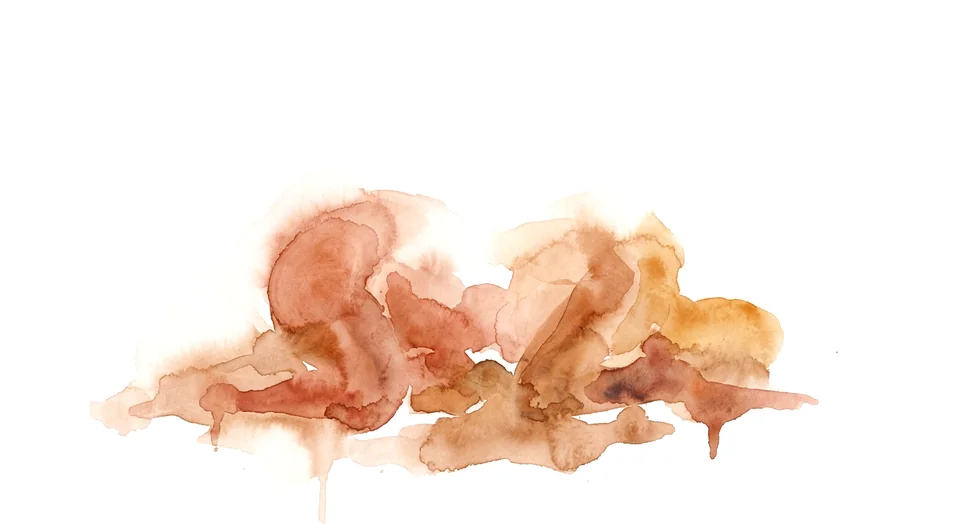
Loose watercolor strokes in warm sienna and rose suggesting reclining figures

THE NEUROSCIENCE OF CONNECTION

Safety as infrastructure

Without felt safety, nothing opens. Porges showed this is physiological. McGilchrist showed that the mode of attention determines what can be perceived: narrow attention sees parts, broad attention sees wholes. AI today is built entirely in the narrow mode. The first job of a system designed for depth is to make the field safe enough for real questions to surface

Watercolor ring in cool blue tones evoking a contained, protected space

The work

See what these foundations look like in practice — experiments, provocations, and open questions from the work of building AI with depth.

Explore our work

An invitation

If our work resonates with yours — whether in research, clinical practice, or building AI differently — we’d welcome the conversation.

Get in touch